Questions Readers Ask Me
My historical romances are set between 1870 and the close of World War I. These novels carry mild but meaningful Christian themes that feel organic to the characters' journeys, offering gentle spiritual resonance without overshadowing the romance.
My contemporary romances share the same emotional depth, layered characters, and thoughtful exploration of complex issues, but without overt religious messaging, allowing faith elements to emerge more subtly through the characters' inner lives.
Across both, you'll find no graphic language or explicit sexuality. My novels are intentionally wholesome, focusing on heartfelt connection, personal growth, and the quiet power of love to heal and transform.
Although I will always love the Gilded Age, many of the professions which I want to explore were not options for women during this era. For example, I wanted to write a novel about a woman who enlisted in the military and one featuring the owner of an orange grove. Those plots simply weren’t realistic for a historical setting. (Incidentally, those ideas ultimately became The Top of the World and Summerlin Groves.) Sometimes it wasn’t the heroine’s career that made the historical setting difficult, but the topic itself. When I was a research librarian, I had a private commission to write an analysis of the golf industry. I was fascinated by the work, and ideas for a novel about the battle to build a golf courses resulted in Meet Me in Virginia.
I have no plans to stop writing historical novels, but I love the freedom my contemporary romances allow me to explore. My current plan to continue writing in both genres.
I was an academic librarian for more than twenty years and worked at a variety of college campuses. At different points I was the library specialist for history, sports, and business. This means I supported those fields by selecting books and resources to support the college curriculum. I taught classes on how to discover answers and spot interesting areas for further research.
It's no coincidence that these three areas (history, sports, and business) repeatedly surface in my novels. For example, Hearts of Steel is a fascinating look at the steel and ice cream industries in the early 20th century. Meet Me in Virginia features not only the passion and frustrations of golf, but the business challenges required to build a world-class golf course. The best example of how librarianship effected my writing can be found in Beyond All Dreams, a novel about the building of the Library of Congress, perhaps the most beautiful library in the world.
Librarians tend to be curious, detail-oriented, and deeply empathetic. The skills I learned as a librarian still shape every book I write, grounding my romances with a historical or cultural texture that lets the love story unfold in a way that feels intelligent and richly human.
It depends on the kind of story you're in the mood for! All my novels aim to deliver a deeply emotional love story, a richly textured plot, and heartfelt inspiration, but some shine brighter in certain areas. Here are my top picks to get you started:
|
|
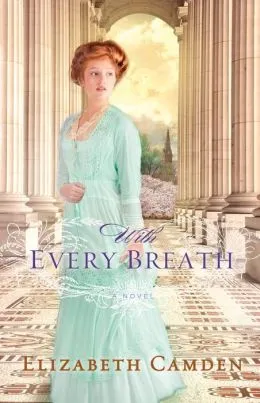
For an emotional, profound romance that tugs at the heart: With Every Breath. Kate and Trevor are complete opposites who slowly learn to love, admire, and rely on each other. The barriers between them are real and hard to overcome, making their journey moving and ultimately satisfying. |
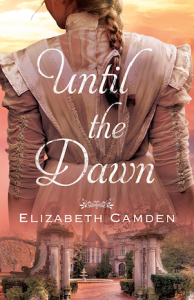 |
For the most powerful Christian messaging: Until the Dawn. This one features a committed atheist struggling to move beyond pure logic and embrace faith's mysteries. I was inspired to write this by my years on college campuses, where I met so many brilliant people whose commitment to proof was a stumbling block to faith. This novel is a thoughtful exploration of Christian belief, doubt, and love. |
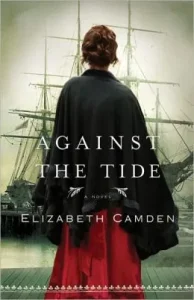 |
For my best-selling and most award-winning romance: Against the Tide. This one swept nearly every major award the year it released and remains my most popular book. Readers love the sparkling banter between Bane and Lydia, plus the high-stakes tension from the villainous Professor that keeps the pages turning. |
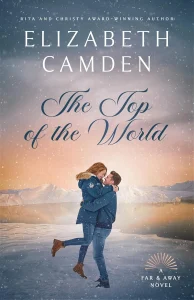 |
My favorite Contemporary Romance: The Top of the World. Holly is an Air Force officer stationed in the Arctic as an environmental scientist. The man who loved and lost her goes in search of her. I love second-chance romances, and this has such a unique setting and two thoughtful people who have a lot of mistakes to work through. |
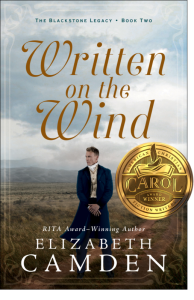 |
For a romance packed with adventure: Written on the Wind. The hero is helping build the Trans-Siberian Railroad across Russia and gets pulled into a year-long quest. The love story between Natalia and Count Sokolov is smart, affectionate, and deeply moving as they fight for a noble cause amid danger and distance. Half this novel is set in Russia, the other half the United States. |
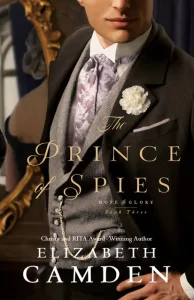 |
My personal favorite of all my novels: The Prince of Spies. It's part Romeo & Juliet, part Gift of the Magi, with a thrilling, selfless love story between Luke and Marianne. Pure joy to write, and it stands alone perfectly even though it's the third in the Hope and Glory trilogy—no need to read the first two novels to enjoy it. |
Whichever you pick first, you'll find clean, uplifting romance with intelligent characters, real emotional stakes, and the kind of historical (or modern) depth that makes the story linger long after the last page.
All of my novels are designed to stand alone. Each book in my trilogies features a different hero and heroine, with its own complete, emotionally satisfying love story and resolution—no cliffhangers here. You won’t feel lost if you pick them up out of order or jump straight to a favorite.
That said, my trilogies are loosely connected through shared settings, recurring secondary characters, or thematic threads, so reading them in publication order can add extra layers of enjoyment and context if you choose to dive deeper.
I’m a firm believer in happily-ever-after, but that kind of ending must feel earned. I never rely on contrived misunderstandings, easy outs, or problems that could be solved with an honest conversation.
For the emotional payoff to land, both characters need genuine growth. They learn to compromise, confront hard truths about themselves, and support each other in ways that change them for the better. I write intelligent characters who face deeply emotional challenges, such as grief, doubt, forgiveness, and duty.
The result is a novel that feels authentic and satisfying, not because everything magically falls into place, but because the love the characters share has been tested, deepened, and proven strong enough to last.
I have written an essay on my own road to publication, which offers a wealth of advice for aspiring novelists. You can read it HERE.